

1·
19 hours agoAh ok that makes sense. Very cool. I’ll probably just stick with my system, since it works for me :D
Hi, I’m sbird! I like programming and am interested in Physics. I also have a hobby of photography.
previous scheep on lemmy.world: https://lemmy.world/u/scheep
Ah ok that makes sense. Very cool. I’ll probably just stick with my system, since it works for me :D
If there was a “key” for every dialogue, that table would get ridiculously long. All the dialogue text is only being used once anyways, so it’s just making it more complicated for, in my opinion, little to no reason.
Using a lookup table for the emotions and character could be interesting though. I prefer my solution of just having all those dialogue objects since it’s simple and works for my use case. In Godot with the “quick load” feature you can find the different sprites very fast. Also, not changing the dialogue system means I can keep using the same one for all my games, so less work to do :D

It means that you can use more secure passwords rather than using easy to guess passwords/one password for everything. Using cloud based ones like Bitwarden means you have to trust the company hosting your passwords to not screw up and suffer from a data leak. I think Bitwarden is pretty trustworthy, but I might be wrong on that one.
Alternatively, you could selfhost (with something like Vaultwarden) or just use something local like KeePass. For the latter, you can choose to sync with SyncThing if you want.
I personally use KeePass, but don’t use SyncThing.
In my area, most of the streets, public transit, etc. are all labelled. I usually don’t type out the full addresses, just the names of the building/street/place. I personally use CoMaps (a fork of Organic Maps created to be more community-led) and it all works fine. I downloaded the maps in my area and, before travelling anywhere, download the maps for where I’m going. Offline maps are great!
I have a really weird thing where I actually like switching between different email providers every couple years or so. Maybe it’s because I don’t receive too many emails, but I find changing the email all my important accounts and forgetting about all the ones I don’t use anymore refreshing.
First I tried Proton Mail, then moved to Tutamail, but I didn’t like both as they did not support IMAP out of the box so I couldn’t use things like Thunderbird. I then moved to “Disroot”, which was decent and supported IMAP, but now I use one called “Autistici”. Another good one I would recommend is mailfence, which I set up for a family member once.
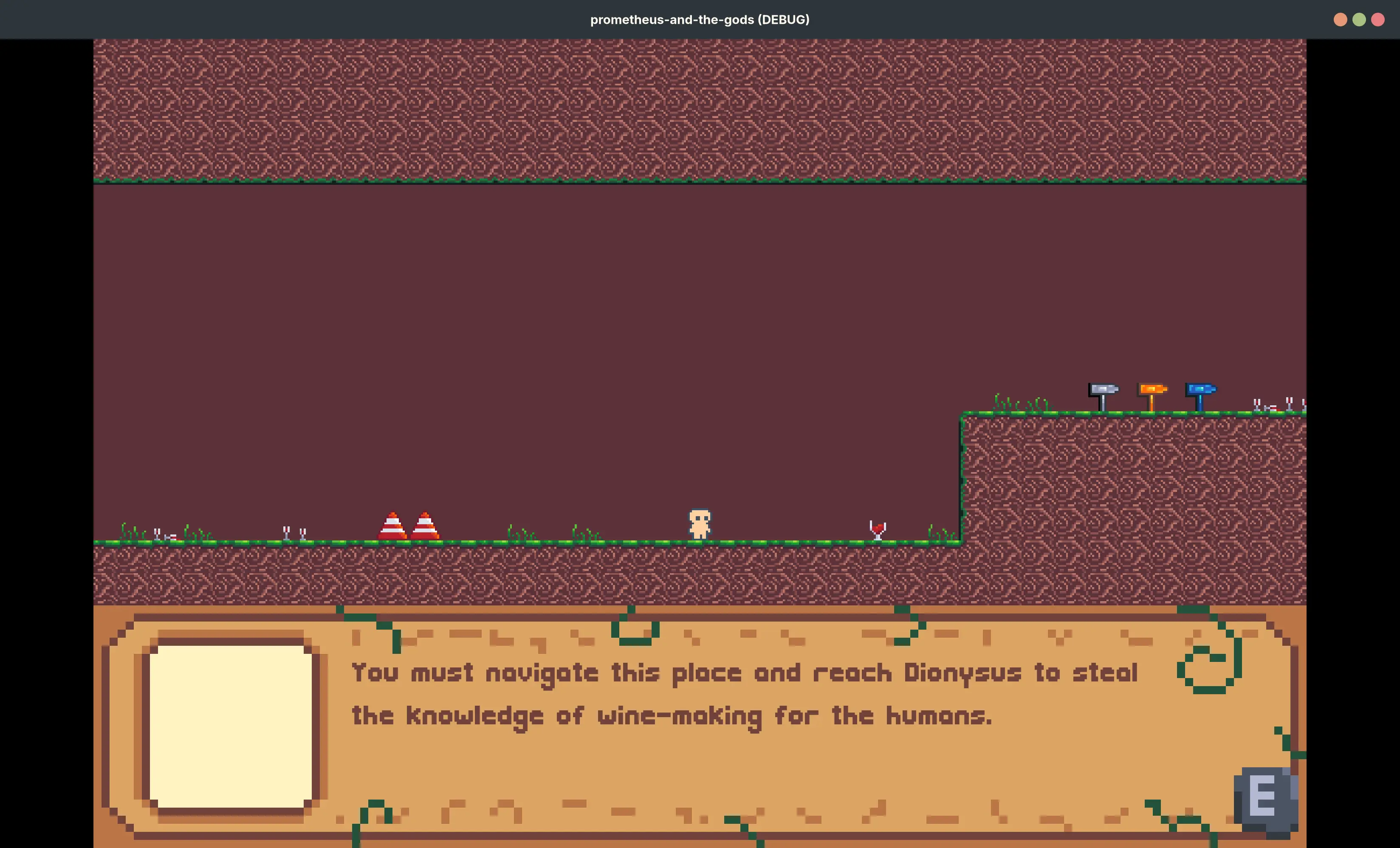
How my dialogue box works is by having a “Dialogue” object that has three parameters: the text, the avatar, and the duration (longer dialogues wait for 5s, shorter could be 3s). And in each “conversation”, it’s pretty much looping through an array of these dialogue objects. So for every conversation there is in the game, I would have to change the dialogue objects of each one.
And I don’t think I can map it to specific textures since I have multiple textures for different expressions (happy, shocked, angry, etc.) and am likely going to add more in the future so I can’t really hard code that in.
It’s quite a bit of work for something that I find mostly unnecessary as all the characters introduce themselves when you meet them and there is a clear visual distinction (different shapes, colours, etc.) between all of them.
On adding the character names to the dialogue box, I don’t think I’ll do that. It’s too much work to change EVERY SINGLE dialogue and all the characters introduce themselves anyways. I think all the dialogue sprites are unique enough (Player is the duck, Prometheus is the human with golden hair, the winds are their own thing, the narrator is a donut thing, etc.)
if it’s not a bird nor a plane, it must be superman!
switching to linux! (an upgrade in general usability too)
self-hosting nextcloud, immich, radicale, and vikunja to replace google drive/pcloud, google photos, not having a synced calendar at all (never used gcal), and todoist. Only downside with Vikunja is there’s no mobile app (only a work-in-progress one that doesn’t seem to have been updated in years) so I have a shortcut to the website instead. Works fine for me :D
Using local mp3s instead of Spotify (offline listening is awesome!)
RSS feeds to catch up on news
using foss alternatives: inkscape instead of illustrator, OSM instead of GMaps, joplin for notes, etc.
not using gmail
I always thought it was the sound. A dry pop vs a wet squelch
Today I learned that POTUS stands for “President of the United States”, never knew that before.
Interesting, I learned something new today :D
a font that’s free for personal use called “Cute Pixel”
To be fair, Samsung’s new Fold 7 does seem to be very thin (and surprisingly keeps the same battery capacity with the Fold 6), and Apple Silicon has always been very good.
But things like larger camera sensors, ridiculously large SiC batteries, superfast charging speeds (Samsung does have 45W, which is probably enough for most people, but Apple unfortunately does not have fast charging…), and high-value budget to midrange phones (e.g. Nothing’s latest ones are awesome with clean software, and of course all the Chinese ones like Redmi, Oppo, Poco, etc. that usually have bloaty software) the big brands don’t really have anything that competes with the other smaller brands.
One comment already pointed out that Samsung would rather use their own sensor and are probably developing their own 1" sensor (as well has better sensors for the ultrawide and telephotos). A whole bunch say that the big brands usually play the long game and see how the latest tech develops before implementing it in their own smartphones. Another says that Apple and Samsung produce way more phones than the smaller brands so they have to wait for the tech to scale. So Apple and Samsung certainly have legitimate reasons to wait.
A bit off-topic, but I think it’s kind of crazy that Huawei and Xiaomi were able to develop their own cars. Pretty wild.
just installed it, and it works great :D
if their phones go poofy it would be very bad
and microsd card slots. Pushing people to pay more for storage upgrades…
I’ve got LibreTranslate installed so don’t need another translator, but Mozhi seems pretty cool though :D
fair enough. It’s not very nice big tech, but they were never that nice to begin with




Proton and Tutamail don’t support IMAP as they use their own system for encryption and whatnot, which means emails are more secure (as long as everyone uses Proton and Tutamail, which the majority of people don’t). I also find their built-in clients to be quite slow. Disroot, Autistici, and mailfence all support IMAP. There’s a bunch more good ones (both free and paid) that support IMAP. Lots of people uses mailbox.org, which is based in Germany, and some people use Fastmail, which is based in Australia.