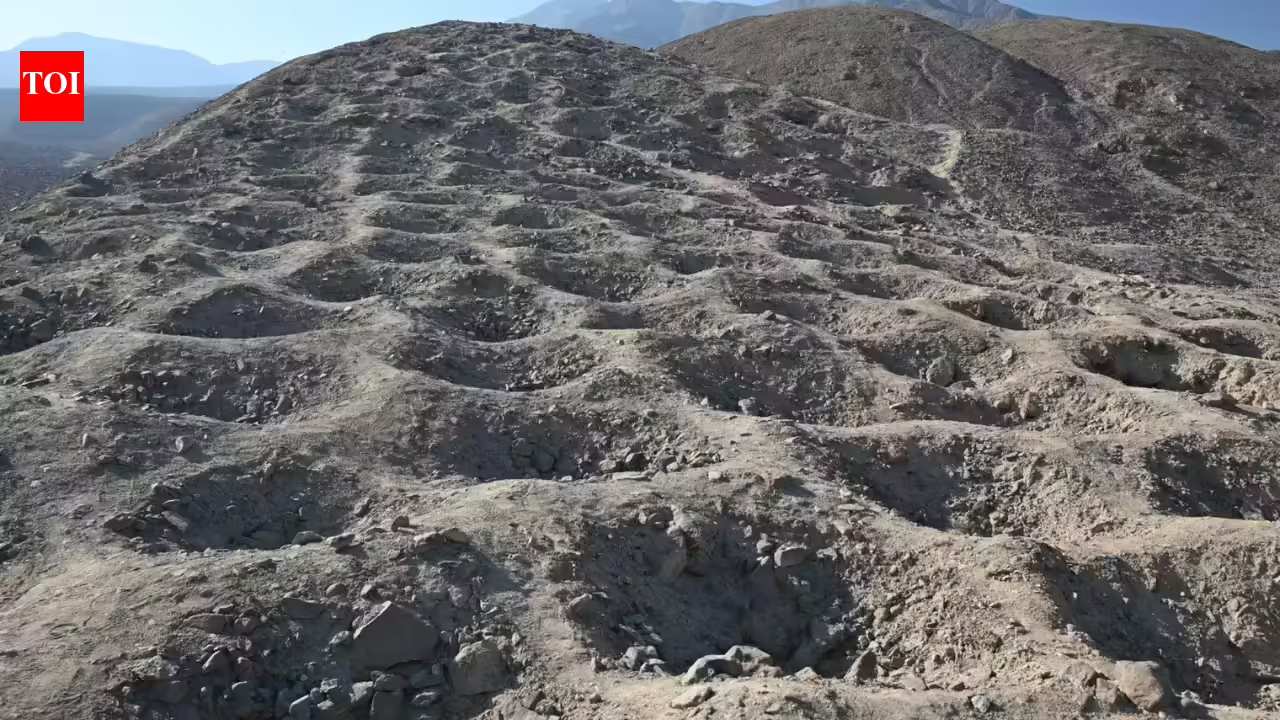
For nearly a century, thousands of strange holes carved into a barren Peruvian hillside puzzled archaeologists, historians, and even conspiracy theorists.
No, scientific method says we collect evidence, then try to find reason, get to some conclusion. Yes, it’s an educated guess, but based on some evidence. Unlike your bullshitting: “I think that in my armchair 5000 km away, I must be right, and the archeologists on site are wrong”
Educated guess, based on very little evidence. Just like the above linked article where they found some broken bowl pieces, determined that the pieces are ~500 years old, thus the holes must be too… Only to be proven otherwise just a few years later because apparently considering the fact that maybe the bowls got there AFTER the holes were dug, is an outlandish idea.
Besides, my bullshitting was a theoretical example focusing not on being right, but showing how archaeologists can be wrong by assuming things that are very loosely supported by evidence. But that clearly went above both your heads…


No, scientific method says we collect evidence, then try to find reason, get to some conclusion. Yes, it’s an educated guess, but based on some evidence. Unlike your bullshitting: “I think that in my armchair 5000 km away, I must be right, and the archeologists on site are wrong”
Educated guess, based on very little evidence. Just like the above linked article where they found some broken bowl pieces, determined that the pieces are ~500 years old, thus the holes must be too… Only to be proven otherwise just a few years later because apparently considering the fact that maybe the bowls got there AFTER the holes were dug, is an outlandish idea.
Besides, my bullshitting was a theoretical example focusing not on being right, but showing how archaeologists can be wrong by assuming things that are very loosely supported by evidence. But that clearly went above both your heads…