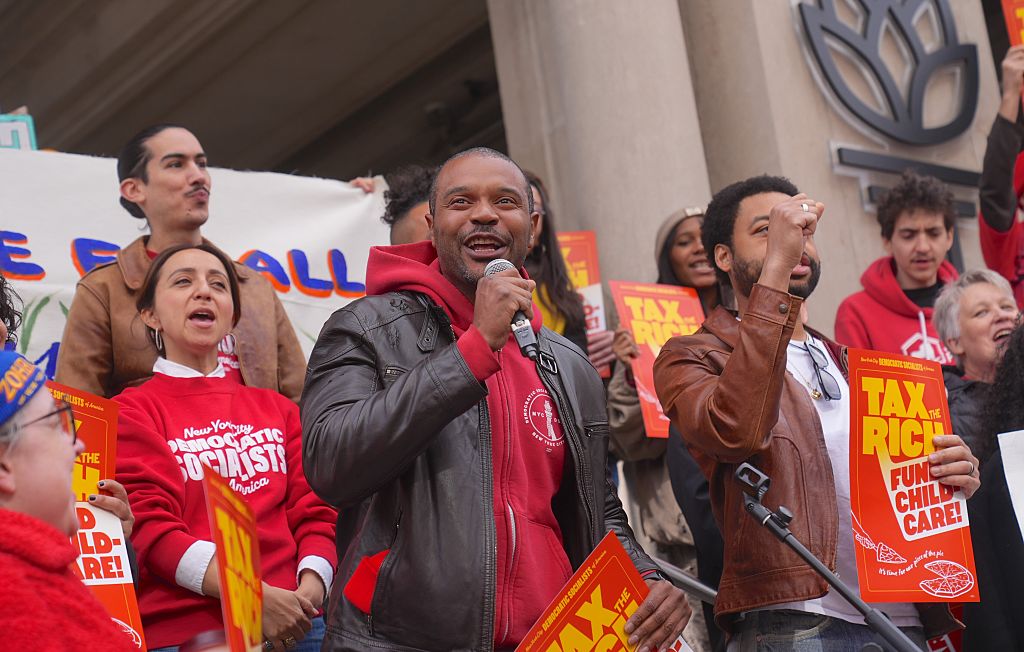
Could democratic socialism become the brand of a new generation of political actors — not just on the fringe, not just in New York City, but across the country?
Fascism is a far-right, authoritarian political ideology characterized by dictatorial leadership, extreme nationalism, suppression of political opposition, and the subordination of individual rights to what the state or nation is said to require.
Stalin wasn’t an fascist? Are you taking the piss?
Red fascism is more or less something ginned up in the early stages of the Cold War as a way to conveniently carry the fight through to the new enemy.
Stalin was not fascist, nor is Stalinism related to fascism. Stalin was a fucking monster regardless of whatever label you prefer, though.
If we look at other cited regimes, your footing is even weaker. Mao wasn’t a fascist, and none of the leaders of the PRC since then have been. Same for Castro and Cuba. Pol Pot was one fucked up dude, but he wasn’t fascist.
Stalin is certainly the closest comparison, but he’s still not fascist.
I understand where you’re coming from, and I understand why you believe this is true, especially when you take into account the current consensus among historians and other authority figures on the subject. They generally agree that Stalin and the other figures you mentioned were not fascists.
I disagree.
They qualify as fascists under every metric of the definition, and in abundance. Being communist, or labeling Stalin’s system “Stalinism,” does not exclude it from being fascism. Those labels do not change the underlying structure.
By every measurable standard, they were fascists, unequivocally,
Saying that a totalitarian ultra-nationalistic authoritative and violent regime isn’t fascist because they called themselves communists is historically and morally disingenuous.
What a great little technical out for some of the worst people on Earth and in human history to not be called fascists.
Because this represents a historical double standard. Hitler called himself a National Socialist, and his party bore that name, yet he is almost universally regarded as a fascist. Meanwhile, Stalin called himself a communist, implemented many of the same methods of repression, mass murder, political terror, and totalitarian control, yet he is not considered a fascist simply because he identified as a communist.
Some of the worst people in history seem to be allowed to define themselves by whatever label they chose, rather than by what they actually did.
That doesn’t make sense to me, linguistically, historically, or otherwise. Stalin, , and others exhibited many characteristics commonly associated with fascist regimes. The fact that they called themselves communists or attempted to build socialist states does not, in my view, automatically negate those fascistic characteristics.
It’s perfectly reasonable to disagree with an established historical consensus. We’re not talking about hard sciences like biology or chemistry. We’re talking about history, where conclusions are based on the interpretation of evidence rather than controlled experimentation. Whether history should even be considered a science is a separate debate.
For that reason, I don’t think a historical consensus should be treated as infallible simply because it is widely accepted.
They’re fascists by the very definition of fascism. The caveat in the historical consensus is that fascism is treated as a specific ideology, with the qualifier apparently being the underlying economic system. I disagree with that distinction. Just because Joseph Stalin and Pol Pot were communists does not negate the fact that they also exhibited virtually every defining characteristic of fascism. They embodied nearly every trait of what a terrible authoritarian ruler can be.
Likewise, just because a mass-murdering psychopath who happens to be in charge of a country calls himself a socialist does not automatically make him one in any meaningful historical or philosophical sense. Political leaders do not get to define themselves for the purposes of history. History evaluates them by their actions, not merely by the labels they choose to adopt.
I’m also saying that I disagree with the historical consensus on defining fascism strictly as an ideology. I’ll reiterate that this is not a hard science. I’m not claiming that the laws of thermodynamics are incorrect because I have a philosophical disagreement with them. Rather, I’m arguing for a definition of fascism based on ideological consistency and observable characteristics, not solely on the economic system a regime claims to follow.


Fascism is a far-right, authoritarian political ideology characterized by dictatorial leadership, extreme nationalism, suppression of political opposition, and the subordination of individual rights to what the state or nation is said to require.
Stalin wasn’t an fascist? Are you taking the piss?
Red fascism is more or less something ginned up in the early stages of the Cold War as a way to conveniently carry the fight through to the new enemy.
Stalin was not fascist, nor is Stalinism related to fascism. Stalin was a fucking monster regardless of whatever label you prefer, though.
If we look at other cited regimes, your footing is even weaker. Mao wasn’t a fascist, and none of the leaders of the PRC since then have been. Same for Castro and Cuba. Pol Pot was one fucked up dude, but he wasn’t fascist.
Stalin is certainly the closest comparison, but he’s still not fascist.
I understand where you’re coming from, and I understand why you believe this is true, especially when you take into account the current consensus among historians and other authority figures on the subject. They generally agree that Stalin and the other figures you mentioned were not fascists.
I disagree.
They qualify as fascists under every metric of the definition, and in abundance. Being communist, or labeling Stalin’s system “Stalinism,” does not exclude it from being fascism. Those labels do not change the underlying structure.
By every measurable standard, they were fascists, unequivocally,
Saying that a totalitarian ultra-nationalistic authoritative and violent regime isn’t fascist because they called themselves communists is historically and morally disingenuous.
What a great little technical out for some of the worst people on Earth and in human history to not be called fascists.
So you’re acknowledging that there’s a general consensus among historians and political scientists and rejecting it anyway?
Well, you do you I guess.
That guy literally won’t even concede the fact that America uses prisoners for slave labor, lol. He doesn’t live in reality.
It can’t be slave labor if they’re paid a few cents! /s
I stopped reading their replies after so much bullshit, but I think that was one of his slavery excuses, lol.
Yes, in this case I am.
Because this represents a historical double standard. Hitler called himself a National Socialist, and his party bore that name, yet he is almost universally regarded as a fascist. Meanwhile, Stalin called himself a communist, implemented many of the same methods of repression, mass murder, political terror, and totalitarian control, yet he is not considered a fascist simply because he identified as a communist.
Some of the worst people in history seem to be allowed to define themselves by whatever label they chose, rather than by what they actually did.
That doesn’t make sense to me, linguistically, historically, or otherwise. Stalin, , and others exhibited many characteristics commonly associated with fascist regimes. The fact that they called themselves communists or attempted to build socialist states does not, in my view, automatically negate those fascistic characteristics.
It’s perfectly reasonable to disagree with an established historical consensus. We’re not talking about hard sciences like biology or chemistry. We’re talking about history, where conclusions are based on the interpretation of evidence rather than controlled experimentation. Whether history should even be considered a science is a separate debate.
For that reason, I don’t think a historical consensus should be treated as infallible simply because it is widely accepted.
So they were fascists if you ignore the accepted definition of fascism and insert your own?
No.
They’re fascists by the very definition of fascism. The caveat in the historical consensus is that fascism is treated as a specific ideology, with the qualifier apparently being the underlying economic system. I disagree with that distinction. Just because Joseph Stalin and Pol Pot were communists does not negate the fact that they also exhibited virtually every defining characteristic of fascism. They embodied nearly every trait of what a terrible authoritarian ruler can be.
Likewise, just because a mass-murdering psychopath who happens to be in charge of a country calls himself a socialist does not automatically make him one in any meaningful historical or philosophical sense. Political leaders do not get to define themselves for the purposes of history. History evaluates them by their actions, not merely by the labels they choose to adopt.
I’m also saying that I disagree with the historical consensus on defining fascism strictly as an ideology. I’ll reiterate that this is not a hard science. I’m not claiming that the laws of thermodynamics are incorrect because I have a philosophical disagreement with them. Rather, I’m arguing for a definition of fascism based on ideological consistency and observable characteristics, not solely on the economic system a regime claims to follow.
That’s a whole lot of other words when you could have just said ‘yes’.
I couldn’t not have just said yes. Jeez dude.