Correct me if I’m wrong, but didn’t AlphaFold basically solve protein folding, as in their master database of folds is now complete? Doesn’t it make sense to move on at this point?
If only genetic sequences were so finite. And what happens when researchers are developing a new protein that never existed before? Protein folding is NP-hard—even if P=NP is solved, protein folding may still be a challenge. It is likely that there will always be a need for software like this, and that the software will need periodic updates as new sequence behaviors come to light.
That said, as another comment points out, Google is merely stepping back from the AlphaFold project, which will continue without their funding or oversight.
It does not do everything perfectly. There’s many abnormalities to protein structures and research in that area of biology is certainly far from done too. So there is definitely room to improve it further.
It’s still very important for genetic testing. If someone has a genetic mutation, it can be difficult to know whether that mutation is going to cause its associated protein to stop working or not. Even if we know all of the “normal” proteins in the body, there are countless variants based on people’s specific genetic differences that may or may not have major effects on how those proteins fold, which in turn can have major effects on those individuals’ health.
AlphaFold does a couple of things. It’s capability in predicting how a single protein will be folded tends to be quite nice, but organisms often rely on complex interactions between proteins. It has a feature to calculate the folding of two or more proteins with each other, which is incredibly important to understand more complex interactions in various processes in the human body, as well as drug interactions.
It is also easier to create a database of folding for all normal proteins in the human body. Any change in your DNA, which is somewhat more common than people think, can modify your proteins to one that has not been seen before, since many proteins can have chunks that don’t do anything but act as filler. Except, when those changes affect a bit that doesn’t act as filler or make the filler suddenly interact with other proteins or structures, like making the protein fold entirely differently or become hydrophobic where it shouldn’t be, then you’re in trouble.
These modified proteins need to be analyzed as well and when their primary function in your body is to interact with other proteins, then this multimer functionality is critical. And that certainly needs much more research, as it is very, very far from perfect.


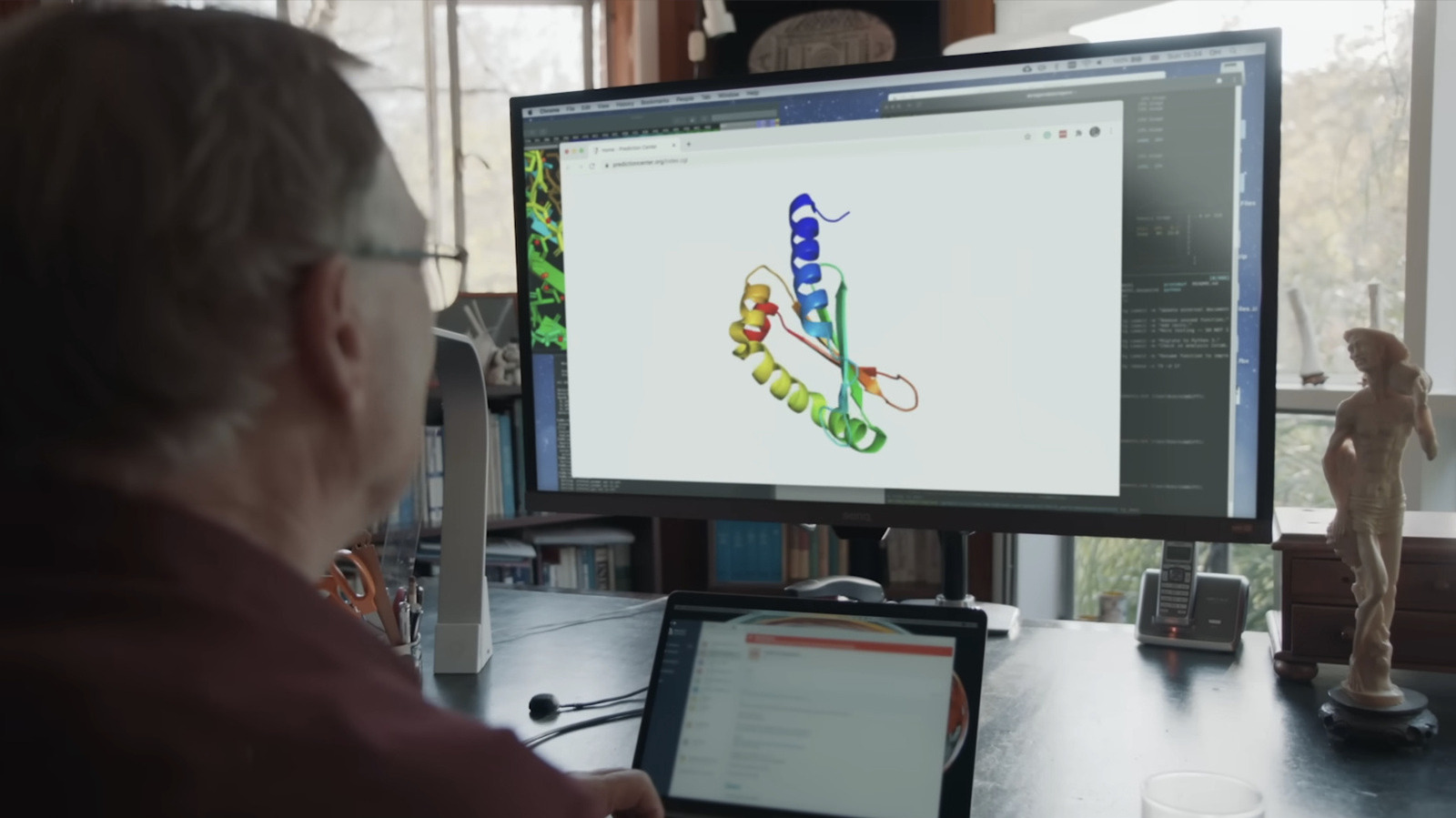
Correct me if I’m wrong, but didn’t AlphaFold basically solve protein folding, as in their master database of folds is now complete? Doesn’t it make sense to move on at this point?
If only genetic sequences were so finite. And what happens when researchers are developing a new protein that never existed before? Protein folding is NP-hard—even if P=NP is solved, protein folding may still be a challenge. It is likely that there will always be a need for software like this, and that the software will need periodic updates as new sequence behaviors come to light.
That said, as another comment points out, Google is merely stepping back from the AlphaFold project, which will continue without their funding or oversight.
It does not do everything perfectly. There’s many abnormalities to protein structures and research in that area of biology is certainly far from done too. So there is definitely room to improve it further.
It’s still very important for genetic testing. If someone has a genetic mutation, it can be difficult to know whether that mutation is going to cause its associated protein to stop working or not. Even if we know all of the “normal” proteins in the body, there are countless variants based on people’s specific genetic differences that may or may not have major effects on how those proteins fold, which in turn can have major effects on those individuals’ health.
AlphaFold does a couple of things. It’s capability in predicting how a single protein will be folded tends to be quite nice, but organisms often rely on complex interactions between proteins. It has a feature to calculate the folding of two or more proteins with each other, which is incredibly important to understand more complex interactions in various processes in the human body, as well as drug interactions.
It is also easier to create a database of folding for all normal proteins in the human body. Any change in your DNA, which is somewhat more common than people think, can modify your proteins to one that has not been seen before, since many proteins can have chunks that don’t do anything but act as filler. Except, when those changes affect a bit that doesn’t act as filler or make the filler suddenly interact with other proteins or structures, like making the protein fold entirely differently or become hydrophobic where it shouldn’t be, then you’re in trouble.
These modified proteins need to be analyzed as well and when their primary function in your body is to interact with other proteins, then this multimer functionality is critical. And that certainly needs much more research, as it is very, very far from perfect.