

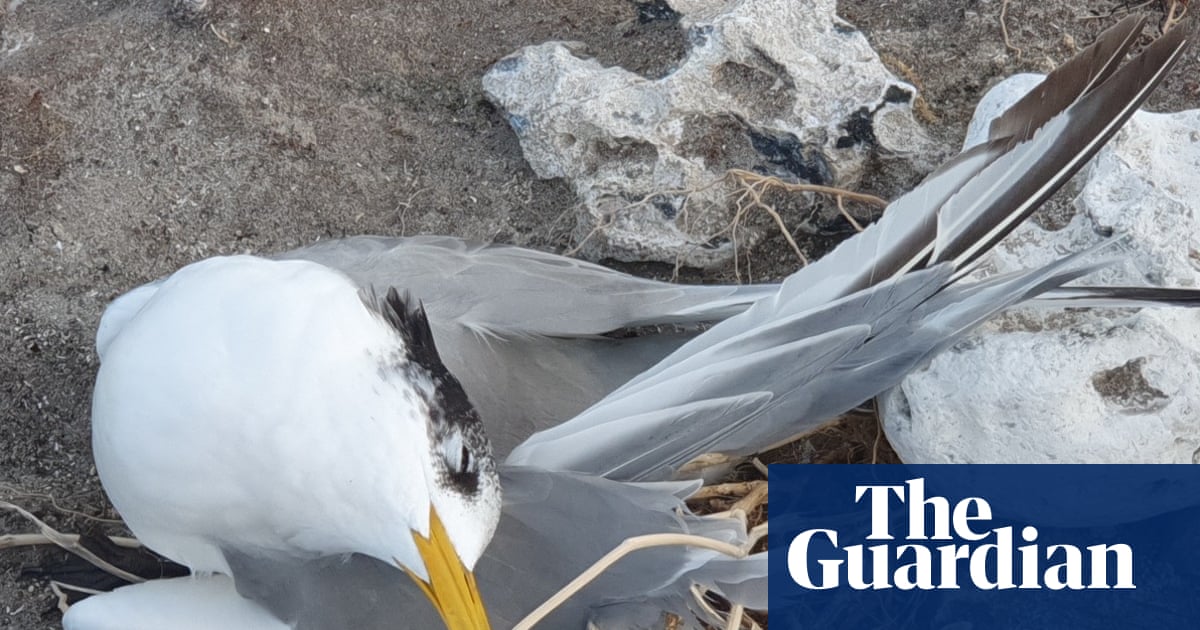
Wildlife carers and clinics – now required to don personal protective equipment and undertake strict cleaning and quarantine measures when dealing with other wild birds injured by cars, in dog and cat attacks or entanglement – have been calling on the state government for support.
Mish Simpson, from SKER wildlife veterinary centre, said the clinic was already at capacity before bird flu. But now, more wild birds are being brought in because other vets have stopped accepting them, partly due to the additional requirements and the risk of exposure for other animals.
Simpson is concerned there is not enough emphasis on slowing the spread, which would give vets, carers and the community more time to prepare. For example, she said, the dead bodies of infected birds are often being left in the environment, where they pose an infection risk to other wildlife, particularly scavengers.
As the federal environment minister, Murray Watt, observed on Monday, the events rapidly unfolding in the south-east, and around Australia, are “the beginning of what is likely to be a long, difficult journey in terms of the impacts on wildlife”.