

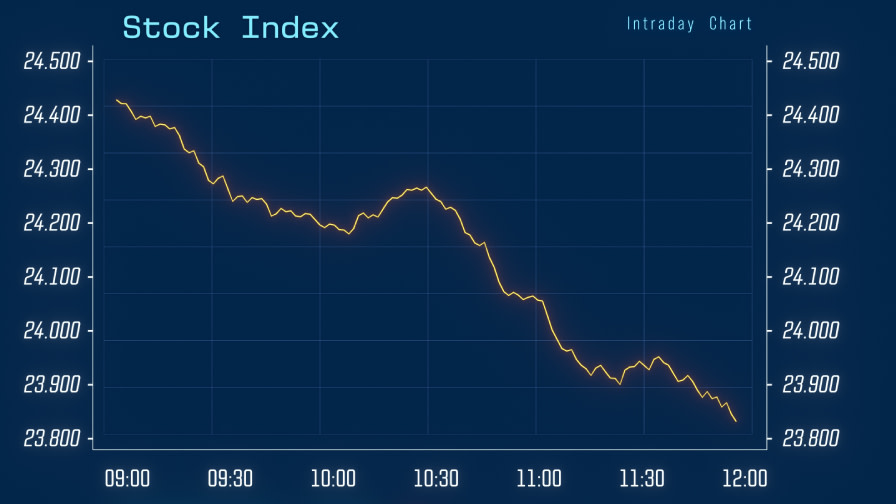
A recent study covering 170 years of financial journalism reveals that we are 97% likely in an AI financial bubble, and leaders should prepare for a crash.
I would argue that, judging by your understanding of how finance actually works, you are demonstrating a fairly significant misunderstanding of the subject.
For starters, the Ferrari example is an entertaining hypothetical, but it is not an accurate representation of how lending markets operate. There is no magical 2% loan available to billionaires simply because they own an expensive property. Banks operate within established lending markets, regulatory requirements, capital costs, and risk assessments. Interest rates are not arbitrarily assigned based on someone’s net worth. There are certainly preferential lending arrangements available to exceptionally wealthy individuals, but that does not mean they can borrow unlimited amounts of money at whatever interest rate they choose. Nor does putting borrowed money into a savings account magically create an arbitrage opportunity. If that were how banking worked, we would have a very different financial system.
More importantly, I think you have completely missed the point of my original comment.
I am not suggesting that wealth inequality, financial markets, lending practices, or the concentration of capital have no effect on ordinary people. Of course they do. In fact, that is precisely why I think we should be more careful about the language we use when discussing these subjects.
My original point was about the sensationalized terminology we have become accustomed to using when discussing financial matters. We routinely take terminology that has a very specific meaning within financial markets and apply it outside that context in ways that make relatively ordinary market movements sound like impending catastrophes.
When someone says the market is in the red, that does not mean the economy is collapsing. When someone describes an economic downtrend, that does not necessarily indicate an economic crisis. When financial analysts discuss a correction, a contraction, or even a recession, those terms have specific meanings. They are not interchangeable with the sensationalized interpretations that people often attach to them.
And that is really what I was getting at. We have become so accustomed to using financial terminology that we no longer distinguish between what these terms actually describe and what people are trying to make us feel when they use them.
There is an enormous difference between explaining an economic phenomenon and using financial terminology to manufacture a sense of impending doom because it generates engagement, clicks, and attention.
Your response actually illustrates my point rather well. Rather than addressing what I was criticizing, you have constructed an elaborate hypothetical about billionaires, Ferrari rentals, and an imaginary infinite-money glitch. It sounds compelling if you are unfamiliar with the underlying financial mechanisms, but sounding financially sophisticated and understanding finance are two very different things.
I also get the impression that a significant portion of your argument stems from the fact that you simply do not like wealthy people. For the record, neither do I, although I suspect our reasons are considerably different. There is, however, an interesting contradiction in the way people approach wealth. They condemn billionaires, criticize the accumulation of enormous fortunes, and simultaneously aspire to become extraordinarily wealthy themselves. I find that particularly fascinating. Unless you are some kind of Buddhist monk who has genuinely abandoned material aspirations, I would argue that most people who claim they have absolutely no desire for wealth are probably being less than honest with themselves. The distinction, in my opinion, should be between criticizing the systems that allow wealth to become concentrated in the hands of a few and simply resenting people for having money. Those are two very different arguments.