- 238 Posts
- 115 Comments




 33·10 hours ago
But the tankies say remote control isn’t an issue. It’s safe to buy a Chinese EV, they say.






According to its 2025 annual report, Google’s parent holding Alphabet holds USD 30.7 billion in cash and cash equivalents (up from USD 23.5 billion the year before). So I am confident they can pay that.
I don’t think that Europe must remain second class for very long.
Yes, Sofi is a great project. They may not yet catch up, but it isn’t their last release. Europe has all what it takes to catch up in all areas, and LLM is one of them.
Europe produces excellent research and is a world leader in many scientific areas, including in technology, but has historically struggled to scale startups. The former is definitely something Europe can be proud of, the latter has to change.
Regarding LLMs, the EU may have a key strength for future development if and when it maintains its regulations regarding data protection and privacy. I thing that neither the U.S. nor China will be a trusted source in the foreseeable future.
As the French Nobel economist Philippe Aghion says, "I believe there will be a demand for a more ethical AI, an AI that avoids some dangers … “People want to be protected. To have some regulations will make us [Europeans] even more attractive.”
Edit: I found an interview from late last year with Olivier Debeugny, the CEO of French start-up Dragon LLM.
In brief, he argues Europe should build its own AI architecture, not rent American capability indefinitely. He draws an analogy to Airbus: Airbus succeeded because European governments decided sovereign aerospace capability was worth building collectively, Debeugny argues. Europe should apply the same logic to generative AI. The argument is that dependency on foreign labs is a structural liability, not just a cost line.


 10·1 day ago
Unfortunately, the U.S. is not the only country that expands its business ties with Israel. China has been increasing its ties with Israel in the recent decade, too. In the meantime, Israel imports from China are even more than twice the volume imports from the U.S.
There are several excellent LLM projects in Europe.
The EU released recently released a multilingual AI model for all 24 official languages in the bloc.
Italy came up with Minerva, the first LLM that was trained on data in native Italian.
There is also Ellis, a cooperation network.
So, I guess Europe can and will, and it also has to hold its own AI in my opinion.


At least some countries are making first steps in the right direction. The world’s largest economies - the U.S. and China - have been extensively increasing business ties with Israel, with China being by far Israel’s largest importer in the meantime.
Netanyahu’s policies are popular in Israel, so are Ben Givir’s.
According to a political poll conducted in Israel on July 12, 2026,
Benjamin Netanyahu’s Likud party would have won 24 of the Knesset’s 120 seats if an election had been held that day. That was down four seats from a similar poll in March, when Likud was projected to win 28 seats. [In the parliamentary election of November 2022, Likud won 32 seatst.]
a majority of Israelis held an unfavorable opinion of their Prime Minister, Benjamin Netanyahu. A year prior, Netanyahu’s approval rating slumped to 41 percent, the lowest in over a decade. 58 percent of Israeli adults did not approve of him at that time. This represented a significant loss of support since the politician’s peak popularity in 2015. Since the start of the Israel-Hamas war on October 7, 2023, the Prime Minister has faced a growing disapproval and was losing ground in the polls.
My personal experience with the Near East is very limited, I just know a handful of migrants living in Europe of either Palestinian or Israeli origin (one of them is half-Palestinian, half-Jew). Literally all of them reject Netanyahu, Ben-Gvir, and most other government officials in Israel and the wider region, but they are friends with people of the other ethnicity.
All they want is a normal life for themselves and the people in the region, they say.
 6·3 days ago
This ‘news’ is a month old, in the meantime Burnham is PM.
Within the space of a year, more than 288,000 German citizens have moved abroad. This is confirmed by data from Germany’s Federal Statistical Office (source in German) (Destatis).
This is more or less in line with the long-term trend as per the linked source. Net migration for German nationals has been negative in the higher 5-digits for several years, while there are more non-Germans entering the country, resulting in a positive net migration.
Edit: We can measure ‘brain drain’ by several standards as we know. One is the Human Flight and Brain Drain Index (HFBDI) that measures the economic impact of “human capital flight”, commonly referred to as “brain drain,” within a country. The index ranges from 0 to 10, where a higher score indicates a greater degree of human capital flight.
The HFBDI shows relatively low scores for higher developed countries, and high scores for countries in the Global South. Germany has a score of 1.6, more or less like all of Europe, North America, and Australia and New Zealand,
The HFBDI average for 2024 based on 175 countries was 4.98 index points. The highest value was in Samoa: 10 index points and the lowest value was in Australia: 0.3 index points.
The world’s two largest countries, India and China, show relative higher brain drains according to this metric with scores of 4.8 and 3.3, respectively.
The dictatorship here is not just ‘corporate’ I would say …
Mistral is a European AI company.
According to the original report:
“The model offerings are undergoing revision, especially in light of availability of open-source and EU sovereign models from sovereign cloud providers recently contracted by the European Commission,” the European Commission’s press service said.
That paints a different picture than the headline, but it doesn’t serve OP’s desired propaganda narrative.
Not yet, but the Metropolitan Police in London have launched an investigation into allegations that security personnel at the Chinese Embassy in London brandished high-voltage stun batons—classified as prohibited weapons under UK law—to threaten peaceful protesters.
Will the UK also sell oil to China, the world’s largest oil importer?
the argument could be made that by giving them publicity you are (indirectly) funding them.
I don’t think money or funding has anything to do with this (and the money comes from the Russian state - or the Russian tax payer - anyway).
Furthermore, according to the court ruling, the content from the sanctioned platforms is prohibited
including in the context of a non-remunerated activity or in the operation of a website financed by voluntary contributions from third parties.
As the ruling says,
only that interpretation makes it possible … to prevent the broadcasting of the propaganda put in place by the Russian Federation and, consequently, to protect public order and security in the European Union.
Emphasis mine.
This isn’t about funding or anything related to money.
These platforms aim to undermine democracy by sowing division, inciting hatred, intentionally spreading fake news. This is why these platforms are banned, maybe comparable with laws on hate speech, Nazi propaganda or Holocaust denial in Germany or similar laws in other Western countries. But this is not censorship.
Aren’t EU sanctions economic?
No, not necessarily (in that case, it;s not).
This ruling, though, seems aimed at enforcing a ban on discussing certain ideas.
What does that mean? Which certain ideas?
That’s not my understanding. The ruling finds that
… profit motives are irrelevant to determining who is an ‘operator,’ the court confirms that these sanctions also apply to individuals running websites that disseminate prohibited content …
and
… refers to any natural or legal person directly or indirectly responsible for making available or transmitting that content to the public.
I am not a legal expert, so please correct me if I am mistaken, but I understand that if you are a private individual posting something on your private social media account, the ruling does not apply to you.
However, if you run a platform to disseminate content - such as a blog on a website, a small non-profit radio station, or the like - then the law does apply.
[Edit typo.]
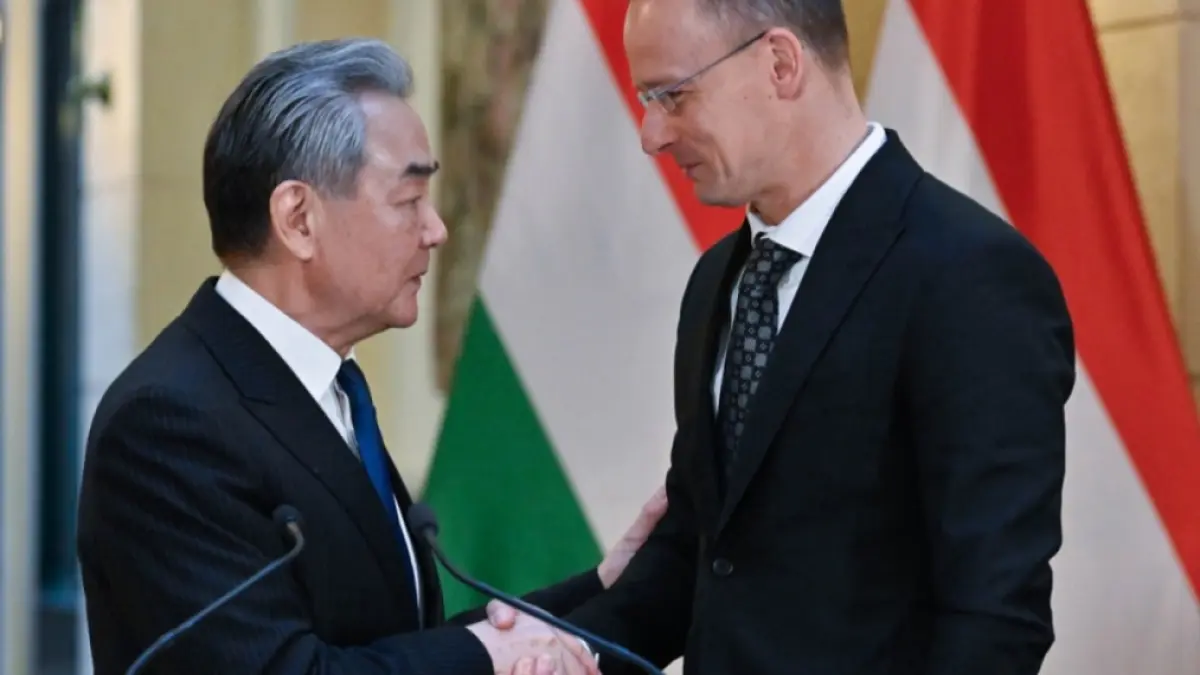
China has always been pursing its own policy also in the Middle East. A major point here is exactly to use Israel as a’geostrategic asset’ if you want to put it that way. The Chinese government prefers to deal with and supports autocratic regimes, negates the rule of law, as it can then better undermine the country.
In Israel, the Chinese Communist Party has been supporting exactly for what its propaganda is accusing the only the West: the genocide in the West Bank and in Gaza. It’s a dehumanizing and disturbing symbiosis that a Chinese firm linked to repression of Uyghurs aids Israeli surveillance in West Bank,
Here is the original report by Amnesty.
This is only one example. There are more similar reports regarding Chinese surveillance tech and other products and services sold to autocratic regimes worldwide to enhance ‘business ties’ …