

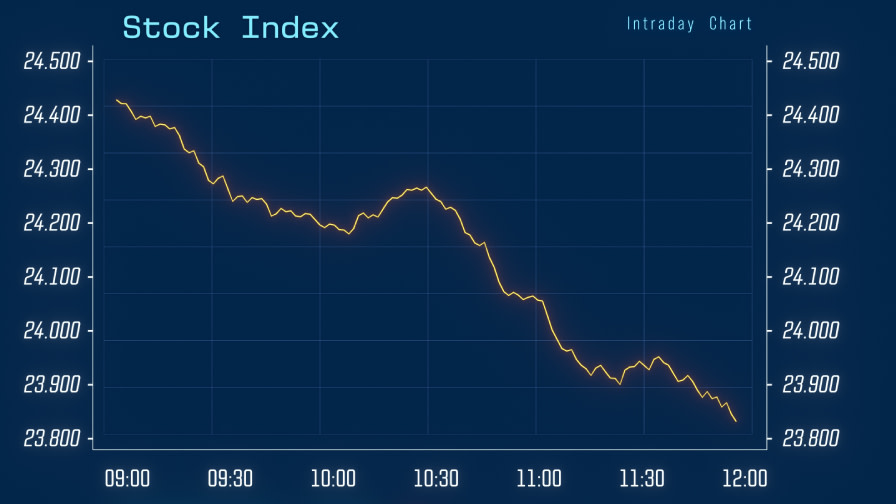
A recent study covering 170 years of financial journalism reveals that we are 97% likely in an AI financial bubble, and leaders should prepare for a crash.
Let’s talk about this for a moment and what it actually means when we talk about the AI bubble bursting.
The AI bubble bursting isn’t necessarily some kind of market collapse. It’s a correction in the valuation of companies that investors believe are going to make enormous amounts of money from AI. Investors are selling off stocks in companies directly involved in AI development, manufacturing, infrastructure, and the industries surrounding them.
What does this actually mean in the real world?
First of all, these companies aren’t necessarily going to have any meaningful impact on the average Joe in the way that the phrase “the market is going to collapse” implies.
Some AI companies will go under. Some will be acquired. Others will survive and become established businesses. The investors who got out early may walk away with enormous profits, while those who bought in at inflated valuations may lose enormous amounts of money. That’s how markets work.
But here’s the thing: an individual billionaire losing hundreds of millions of dollars because he made a bad investment doesn’t necessarily mean anything to you or me. It doesn’t mean anything to a plumber, somebody working at a fast-food restaurant, or the average family trying to pay their mortgage.
We’ve become so accustomed to using financial terminology that makes the fortunes of extraordinarily wealthy people sound like something that directly affects our everyday lives. We hear about billions of dollars being wiped out in the stock market and instinctively associate that with some kind of economic disaster that we’re all going to experience.
That isn’t necessarily what is happening.
If the AI bubble bursts, there will absolutely be financial casualties. Companies will close, employees will lose their jobs, investors will lose money, and some businesses that were built entirely around the expectation of an AI revolution will turn out to have been terrible investments.
But that’s not the same thing as an economic collapse.
Unless the correction spreads into the broader financial system, disrupts essential industries, or triggers a wider recession, most people will continue going to work, paying their bills, buying groceries, and living their lives.
We’ve seen entire industries rise and fall throughout modern economic history. The dot-com bubble is probably the most obvious comparison. A tremendous amount of money was lost, countless companies disappeared, and investors learned some very expensive lessons. Yet the internet didn’t disappear. In fact, it continued developing into one of the most important technologies in human history.
I suspect something similar could happen with AI.
Some companies will disappear. Some investors will get spectacularly wealthy. Others will lose their shirts. And the technology itself will continue developing, probably at a much more sustainable pace.
The important distinction is that a correction in the fortunes of wealthy investors isn’t automatically a correction in the quality of life of ordinary people. We shouldn’t confuse the two.
And frankly, the title of this post suggesting that the market is going to collapse is irresponsible fear-mongering. It takes a relatively straightforward market correction and dresses it up as some kind of impending financial apocalypse. It’s sensationalist language designed to provoke anxiety in people who may not understand the distinction between a sector losing its valuation and the broader economy collapsing. There is a considerable difference between reporting on a potential correction in AI-related stocks and telling people that the market is going to collapse. We should be making that distinction rather than deliberately obscuring it for clicks and engagement.
i must strongly disagree on this point. for most normal people, money is a medium of exchange and value storage. for extraordinarily wealthy people the money is ENTIRELY about affecting everyday life of others (mostly to their benefit).
when a normal person wants to buy a car they need to get some money first. most likely by creating some value and getting paid. or by stealing it or getting them from someone. when they buy stuff they have to give that money away like a limited resource. after that they don’t have the money any more and they have the thing they bought.
when a billionaire wants a ferrari, they don’t have to spend any money. they go to the bank and borrow 10 millions using their 15 million villa as a collateral. the bank will give them the loan on 2% interest since they are basically no risk. then they immediately put the money on a saving account with 5% interest that they use to pay for the loan, issue a bond for 300k and ask the bank to rent them a ferrari for a year (paying with the bond). they didn’t create any value. they didn’t earn any money (hence they also won’t pay any taxes). they didn’t spend any money either (the car is just a rental). yet, they didn’t have a ferrari before and now they do! all they did was they used their money to make someone do something for them. once you can effectively borrow for less than you can invest, you have unlocked an infinite money glitch and putting any number on your wealth is totally pointless.
where the money for the ferrari really came from is a small business that took somewhat more expensive loan to finance themselves. the bank used that loan to finance the 5% interest on that saving account. and that loan being more expensive because it pays for a rich guys ferrari sucks… but it is, arguably, better than there being no money for the loan and no small business at all. and also no ferrari.
so yes. those abstract notions of value that banks and other financial institutions operate with matter. they matter to the everyday joe who won’t be able to invest in the future growth of whatever they do. they won’t be able to borrow money to buy tools for their business or hire contractors because whoever works at the bank will take one look at the financial times and say “no can do”.
I would argue that, judging by your understanding of how finance actually works, you are demonstrating a fairly significant misunderstanding of the subject.
For starters, the Ferrari example is an entertaining hypothetical, but it is not an accurate representation of how lending markets operate. There is no magical 2% loan available to billionaires simply because they own an expensive property. Banks operate within established lending markets, regulatory requirements, capital costs, and risk assessments. Interest rates are not arbitrarily assigned based on someone’s net worth. There are certainly preferential lending arrangements available to exceptionally wealthy individuals, but that does not mean they can borrow unlimited amounts of money at whatever interest rate they choose. Nor does putting borrowed money into a savings account magically create an arbitrage opportunity. If that were how banking worked, we would have a very different financial system.
More importantly, I think you have completely missed the point of my original comment.
I am not suggesting that wealth inequality, financial markets, lending practices, or the concentration of capital have no effect on ordinary people. Of course they do. In fact, that is precisely why I think we should be more careful about the language we use when discussing these subjects.
My original point was about the sensationalized terminology we have become accustomed to using when discussing financial matters. We routinely take terminology that has a very specific meaning within financial markets and apply it outside that context in ways that make relatively ordinary market movements sound like impending catastrophes.
When someone says the market is in the red, that does not mean the economy is collapsing. When someone describes an economic downtrend, that does not necessarily indicate an economic crisis. When financial analysts discuss a correction, a contraction, or even a recession, those terms have specific meanings. They are not interchangeable with the sensationalized interpretations that people often attach to them.
And that is really what I was getting at. We have become so accustomed to using financial terminology that we no longer distinguish between what these terms actually describe and what people are trying to make us feel when they use them.
There is an enormous difference between explaining an economic phenomenon and using financial terminology to manufacture a sense of impending doom because it generates engagement, clicks, and attention.
Your response actually illustrates my point rather well. Rather than addressing what I was criticizing, you have constructed an elaborate hypothetical about billionaires, Ferrari rentals, and an imaginary infinite-money glitch. It sounds compelling if you are unfamiliar with the underlying financial mechanisms, but sounding financially sophisticated and understanding finance are two very different things.
I also get the impression that a significant portion of your argument stems from the fact that you simply do not like wealthy people. For the record, neither do I, although I suspect our reasons are considerably different. There is, however, an interesting contradiction in the way people approach wealth. They condemn billionaires, criticize the accumulation of enormous fortunes, and simultaneously aspire to become extraordinarily wealthy themselves. I find that particularly fascinating. Unless you are some kind of Buddhist monk who has genuinely abandoned material aspirations, I would argue that most people who claim they have absolutely no desire for wealth are probably being less than honest with themselves. The distinction, in my opinion, should be between criticizing the systems that allow wealth to become concentrated in the hands of a few and simply resenting people for having money. Those are two very different arguments.
I appreciate your very reasonable take on what is going on and I agree with most of your points. I will say, though, when a single company (Nvidia) causes massive fluctuations in one of the major indexes (Nasdaq), I think it is a little naive to think that the AI industry bubble bursting is not going to have a major cascading effect on the economy as a whole.
Good post. I’m no economic expert in any way, but I’ve lived through a few of these bubbles, and they definitely aren’t all the same. The 2008 Real Estate/ Banking Bubble affected a lot of regular folks because the banks decided they were going to take everybody’s houses, and they succeeded for quite a while, until they started getting stopped by the courts.
OTOH, the late 90s Dot.Com Bubble didn’t really affect the average person much, it was just something that happened to a bunch of poorly conceptualized, overly financed corporations, mostly run by people barely out of college.
This one feels like the second type, where it will mostly affect a bunch of perversely wealthy sociopaths (Waaaah!) and won’t make that much difference to most people beyond quiet schadenfreude, which is my new, moderately satisfying hobby.
Its actually a pretty short sighted and terrible post. When AI companies are basically responsible for 100% of the US economic growth currently, when they fail (they will fail), the down stream effects are going to make 2008 look like a kids game. Its jut the beginning. Thing about it. The kids in college currently can’t find jobs, those who have jobs can’t get raises, and the only money moving through the economy is the hope that AI will allow more people to be fired. When that fails and companies realize they can’t make more money, that they are losing out to China and other nations, the ‘regular people’ are going to be on the chopping block.
Don’t believe it, look at whatever job you are in. Getting a 5%+ raise this year? No one getting fired? Hiring a bunch of people? One or more of those things is not true, especially for the majority.
Thank you. When 5 tech companies represent 30-40% of most Americans retirement and 401k accounts the average Joe is about to get wrecked.
So it’s not time to crack each other’s heads open and feast on the goo inside?
Only if their net worth has more than 8-9 zeros then there’s never been a better time
Are we talking zeros before or after the highest number?