

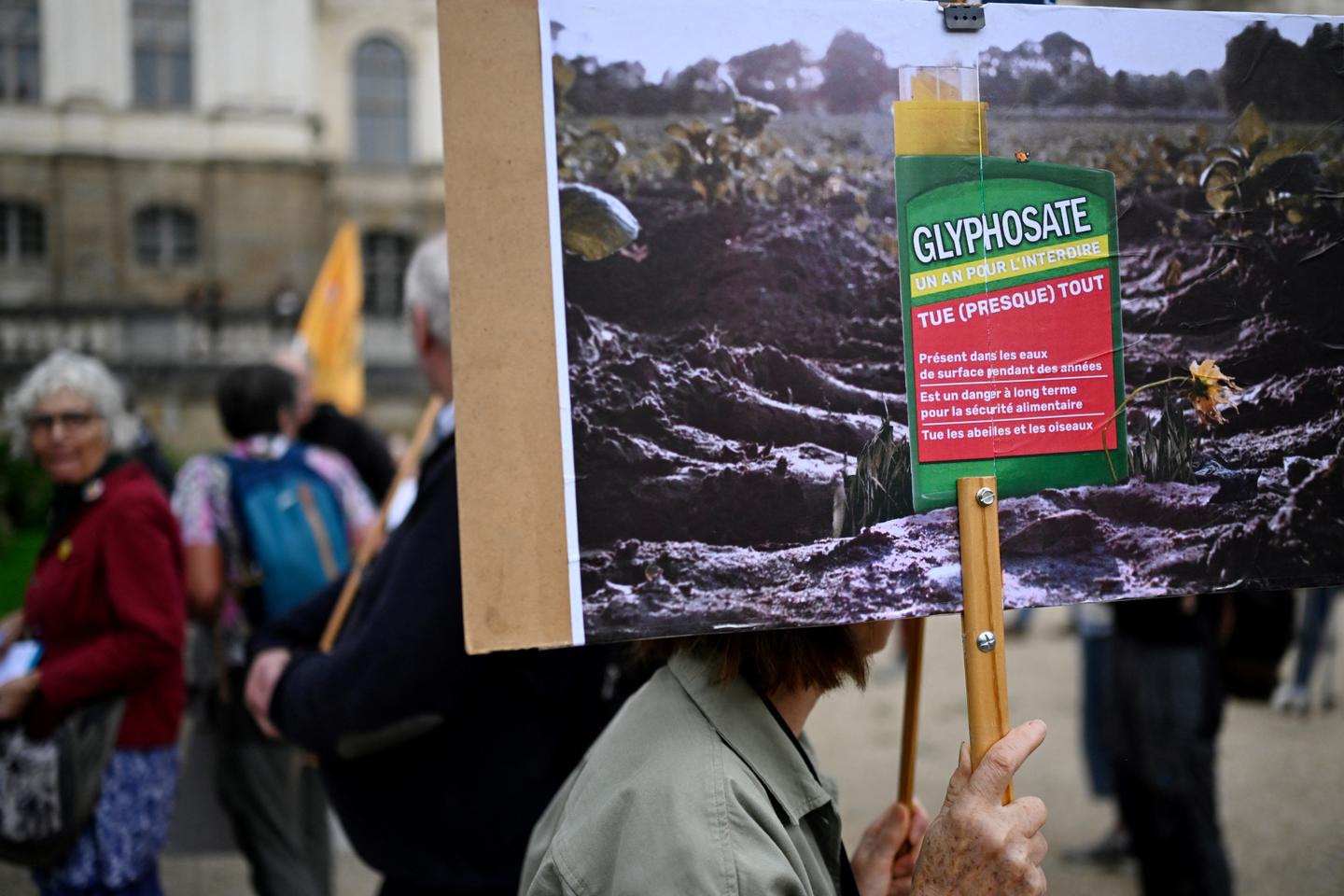
A quarter-century after its publication, one of the most influential research articles on the potential carcinogenicity of glyphosate has been retracted for “several critical issues that are considered to undermine the academic integrity of this article and its conclusions.” In a retraction notice dated Friday, November 28, the journal Regulatory Toxicology and Pharmacology announced that the study, published in April 2000 and concluding the herbicide was safe, has been removed from its archives. The disavowal comes 25 years after publication and eight years after thousands of internal Monsanto documents were made public during US court proceedings (the “Monsanto Papers”), revealing that the actual authors of the article were not the listed scientists – Gary M. Williams (New York Medical College), Robert Kroes (Ritox, Utrecht University, Netherlands), and Ian C. Munro (Intertek Cantox, Canada) – but rather Monsanto employees.
In cautious terms, Martin van den Berg, co-editor-in-chief of Regulatory Toxicology and Pharmacology, noted that “employees of Monsanto may have contributed to the writing of the article without proper acknowledgment as co-authors. This lack of transparency raises serious ethical concerns regarding the independence and accountability of the authors of this article and the academic integrity of the carcinogenicity studies presented.” Other failings are cited, notably the failure to disclose the authors’ compensation by Monsanto. “The potential financial compensation raises significant ethical concerns and calls into question the apparent academic objectivity of the authors in this publication,” van den Berg added.
Scientists who allow their names to be used as cover for corruption should be barred from ever publishing again, and all their other papers should have an asterisk.
They ceased to be scientists at that point.This is a problem generally in science. Research is often funded by business and their objectives only ever align with the pursuit of scientific truth by accident. The Open Science initiative has some good mitigations for this problem.
All but one of the authors of this paper are dead. I agree with you though, and I would hope a retraction of a paper as serious as this would trigger a review of all the papers connected to the authors.
The disavowal comes . . . after thousands of internal Monsanto documents were made public . . . revealing that the actual authors of the article were . . . Monsanto employees.
Those employees and the managers who created the fraud are not named.
They should be more than named
Anyone that has been near an open barrel of glyphosate will tell you it’s obviously poison
TLDR: Too big to fail so they didn’t fail.
It’s important to understand that glyphosate has been the subject of a lot of studies. Naturally those studies require increased scrutiny now, in case the same dishonest tactics have been used on others, but the likelihood is that the overall conclusion that glyphosate is safe is still true.
Unfortunately the retraction of a paper by a journal only really harms the scientists who were involved, not the company that instigated the fraud. When there’s a financial incentive to subvert scientific transparency, that seems insufficient. But I dunno how you could resolve this legally (or legislatively).
Safe for 20+ years of daily chronic exposure?
I hope your bit Ag masters are paying you well. Because parroting that Glyphosate is safe in 2025 is kinda crazy NGL
I’m a committed Wikipedia reader, so if you’ve got a better source to read (or “parrot”) then go ahead. If you don’t reply I’ll know you’re on the pocket of big dandelion.
Maybe read the whole article then, because it would have told you it is still classified as a probably carcinogenic for humans.
You just decided to ignore the part you didn’t like.
Are you referring to this paragraph?
The Joint FAO/WHO Meeting on Pesticide Residues (JMPR),[109] the European Commission , the Canadian Pest Management Regulatory Agency , the Australian Pesticides and Veterinary Medicines Authority [110] and the German Federal Institute for Risk Assessment [111] have concluded that there is no evidence that glyphosate poses a carcinogenic or genotoxic risk to humans. The United States Environmental Protection Agency (EPA) has classified glyphosate as “not likely to be carcinogenic to humans.”[112][113] One international scientific organization, the International Agency for Research on Cancer classified glyphosate in Group 2A, “probably carcinogenic to humans” in 2015.[15][13]
Because I count that as 6 saying “no evidence of a cancer link” and 1 saying “probably carcinogenic.”
At the very least, that suggests to me that if it is carcinogenic, it’s at such a low level that the effect is hard to measure, and so not worth worrying about.
No scientists were harmed in this retraction. The PIs are already retired.
Yeah good point. I mean arguably they are still reputationally damaged, but that’s also not enough.
Institutions are doing this worldwide, they kick the ball on retractions down the road with >15 year invesigations. By the time they report back to the journal, authors have retired. These clowns got famous and held funding for decades.
They put their name on bunk science and their reputation deserves to suffer for it.
Reputations don’t mean much. Worst that happens is they end up CSO at a biotech.
They’re dead

