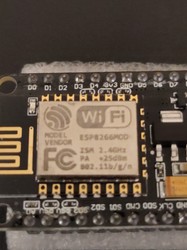
I don’t have any reason right now to suspect this happening, but I can’t get it out of my mind that the Meshtastic project may at some point paywall the app or otherwise enshittify it as it gains popularity.
This sudden fear came at the heels of another open source project I had been using (PicoKey) deciding to pull some enshittification. The dev pulled down all the tools that let you configure the keys, left them down for several months, and finally released a paywalled app which is now the only way to configure them. Thankfully I am still using my Yubikey for most things and the PicoKey was just for some internal test stuff.
I know MeshCore does similar; you pay for the app but the firmware is free.
So, is this fear misplaced, justified, and does anyone see the project forking if this were to happen?
Edit: I’m aware of a few desktop apps such as an AIM-like messenger and a TUI-based one). I’m talking more for Android or iOS for sake of portability.
Edit 2: I’m not at all opposed to paying for things like this to support the developers. Far from it. But the paid version has to provide a benefit that does not come at the expense of intentionally making the existing/free version worse or just pulling it altogether (looking at you, PicoKey guy). I also won’t subscribe. Ever. lol.
I think the biggest issue with Meshtastic is the dependence on a proprietary hardware standard. So there is definitely a risk there and the developers of Meshtastic software should probably consider supporting the more open Wi-Fi HaLow (802.11ah) standard in addition.
I would love to get my hands on some HaLow gear but it’s either unobtanium or crazy expensive compared to LoRa.
There’s some Heltec (I think?) chips I saw recently but I haven’t dug too far into libraries or driver support.
Lora as tech is unlikely to become unobtainable, since it is widely used by utility companies. In my opinion, a much more realistic threat ( in the US, at least) is the FCC locking down its usage.
Everyone could go rogue and ignore the FCC, of course. But a restrictive rules change would discourage manufacturers, which would dry up hardware supplies and firmware support.
Theres meshcore and the new meshcore-open app
The closest i found is pulling the code down to a local git server and runningbthe build myself then usingbthe pythpn tool to get everythingbsetup. Took a long time. And dependencies are all online.
Honestly nothing in the stack is prepated for a true internet outage. You can maybe get the bin/images files in case of a SHTF moment, but thats about it.
Oh i may have interpreted the question wrpng. Woops. Well its still a comsideration. Dependencies are all liabilities waiting tp happen.
As far as the applications go, those are currently open source so if the current publisher decides to take their app in a different direction, it shouldn’t be an issue for a fork to be created to keep it usable. I believe the only proprietary part is LoRa, which Semtech could increase prices or something, but if they raise the prices too much then an alternative will be found. There doesn’t seem to be anything that ‘locks’ in users that could be used as the basis for enshittification.
Right, I’m mostly knee-jerking from what happened with the PicoKey project. Had been active with it and the dev pulls a 180 and rips out every way to configure it except the paid tool.
The configuration tool (pico-commissioner) was also open source but the dev nuked the repo for it. A search for forks has turned up zilch.
Refs:
Wow, that’s a really disappointing development. That project looked really promising.
Its certainly a valid fear in general these days but given the target audience of meshtastic is at least in part a lot of off-the-grid, diy sort of folks, i dont think enshittification would get very far.
Im now getting into meshcore after having been playing with meshtastic for about a year, i plan to run nodes for both. If a third thing comes along ill probably run that too but so far im not aware of anything notable.
Yeah, I haven’t messed with Meshcore yet but I have been playing with Reticulum and the RNodes. I think it’s the same guy behind both, if I’m not mistaken (Edit: I am mistaken, though the dev seems to work on both).
I guess I’m just coming at it from the “firmware is free, app is paid/subscription” angle. Like, I could see the basic Meshtastic firmware remaining free but the one with the fancy UI (for things like the T-Deck) being paid and the app going paid/subscription.
I would hope the target audience for the project would discourage that kind of thing, but like you said, “these days” are what they are.
I dont know if maybe there are premiun features with some apps but so far as i know the meshcore app is free as well, if it was to be paywalled the oldest non paywalled version would still work and most people probably wouldnt upgrade, its not like with a phone or other manufacturer locked device that can force upgrades and prevent downgrades, if a new update gets released and paywalls old festures most people would just not update.
I could totally see some unofficial third party clients or things with improvements being paywalled by smaller groups or individual devs, but as a whole i dont think it would affect users ability to use the network.
I could see newer features and improvements being paywalled in theory but i dont think it would be profitable to actively lock out older/free users. Anything too enshittifiying would either be ignored by most users or cracked and removed.
I’m not sure if you were referring to the meshcore app, but it is not open source, and there are paywalls in it if you want to access your repeater faster, although there is a new meshcore open app that’s fully open source without any of that crap.
I was thinking of both tastic and core, but i wasnt aware core had a closed source app. The only paywalled limitation seems to be using that specific mobile app to manage repeaters remotely, meshcore-cli has no such arbitrary limitations.
Mainly my point is that as long as the protocol is open nothing is stoping someone elss from creating a version that removes any paywalled limitations.
Oh, for sure. And the mesh core is open source firmware. And the protocol is open. The only thing that is closed source is the app. But since there is an open source app in development, that’s not even a big problem. Because it can just be bypassed.
Personally, I would have nothing to do with meshcore until this new app was released. I played with it for about 10 minutes, about half a year ago, and realized the app was closed source, and have had nothing to do with it since then. Now that there is a fully open source app, I am willing to give it a try again.
Oh nice. Didnt know about this project.